1
You've tried everything.
Your body keeps
returning to the
same place.
About Me
For over ten years, I dealt with chronic back pain and a growing list of symptoms that never felt fully explained. I tried fixing posture the way most people do- adjusting habits, focusing on form, experimenting with different approaches- but nothing truly held. No matter the therapy, I was always in pain. Over time it became clear that following the same process and expecting the same outcome just wasn’t going to work. What you’re reading is what I found when I stopped trying to correct posture and started questioning what was actually causing it. It is not a quick fix, a motivational framework, or a promise. It is a documented process, one that took years of failure to arrive at, and one that I am now making available in full.
Please read before continuing
What follows is a combination of personal experience and established science, specifically the anatomy and mechanics of the myofascial system. I have no formal training in physiotherapy, chiropractic, or any related field. However, what I experienced in my body while I was putting myself through the experience is fact. Everything structured here- the protocol, the phases, the sequencing, the changes I didn’t anticipate, and the consequences I couldn’t have predicted- were built entirely from what I went through myself and by myself. To my knowledge, I am the only person to have gone through this process, which means no clinician or specialist will be able to interpret what happens during it the way I can. Not because I am more qualified but because I am the only one who has been through it and come out pain-free. This is not a medical document and it is not a claim about what will happen to you. If your present reality resonates with my past, you may go through something similar should you put your trust in my Program. It is a documented personal process.
Read it as such.
This is not medical advice, diagnosis, or treatment. Individual results vary.
2
Why effort rarely solves a structural problem
I’ve learned that posture is usually framed as a habit problem: sit straighter, stand taller, strengthen this, stretch that. Those ideas sometimes helped briefly. But if posture problems were mainly about awareness or discipline, most people wouldn’t stay stuck for years while actively trying to improve like I did.
From my mid-teens into my late twenties, I worked with multiple practitioners across multiple cities and was consistently in the same chronic pain. What I learned was that the issue wasn’t effort- it was that posture was being treated as the problem, when it was really the consequence. And I can confirm this as I’m now pain-free and my reality looks and feels reborn.
Why Posture Keeps Reverting
Most approaches didn’t address the internal conditions that create imbalance in the first place. When those internal conditions remain unchanged, the body has no reason to change. Posture isn’t stubborn. It’s faithful. It reflects exactly what is organizing it underneath.
What I Eventually Called IMM
How the Pattern Hardens
Over time, the pattern I was living in hardened into place, like stone poured into a crooked mold and left to set. I call that state Internal Muscular Misalignment, or IMM.
What IMM Actually Is
IMM is not a medical diagnosis. It is a descriptive label I created to name something I observed in my own body and couldn’t find an existing term for. The label is mine. The underlying biology is not. Muscular Misalignment is already a term- I just added “Internal” to it so you’ll understand my belief that the issue is deeper than surface level- like, super deep. From the outside, my posture looked fine. But internally, I constantly felt like one side was “higher”, or “more forward”, or “uneven” than the other. Essentially, up until now, I never felt like my body belonged to me the way everyone else’s body belonged to themselves.
Where & How These Patterns Commonly Form
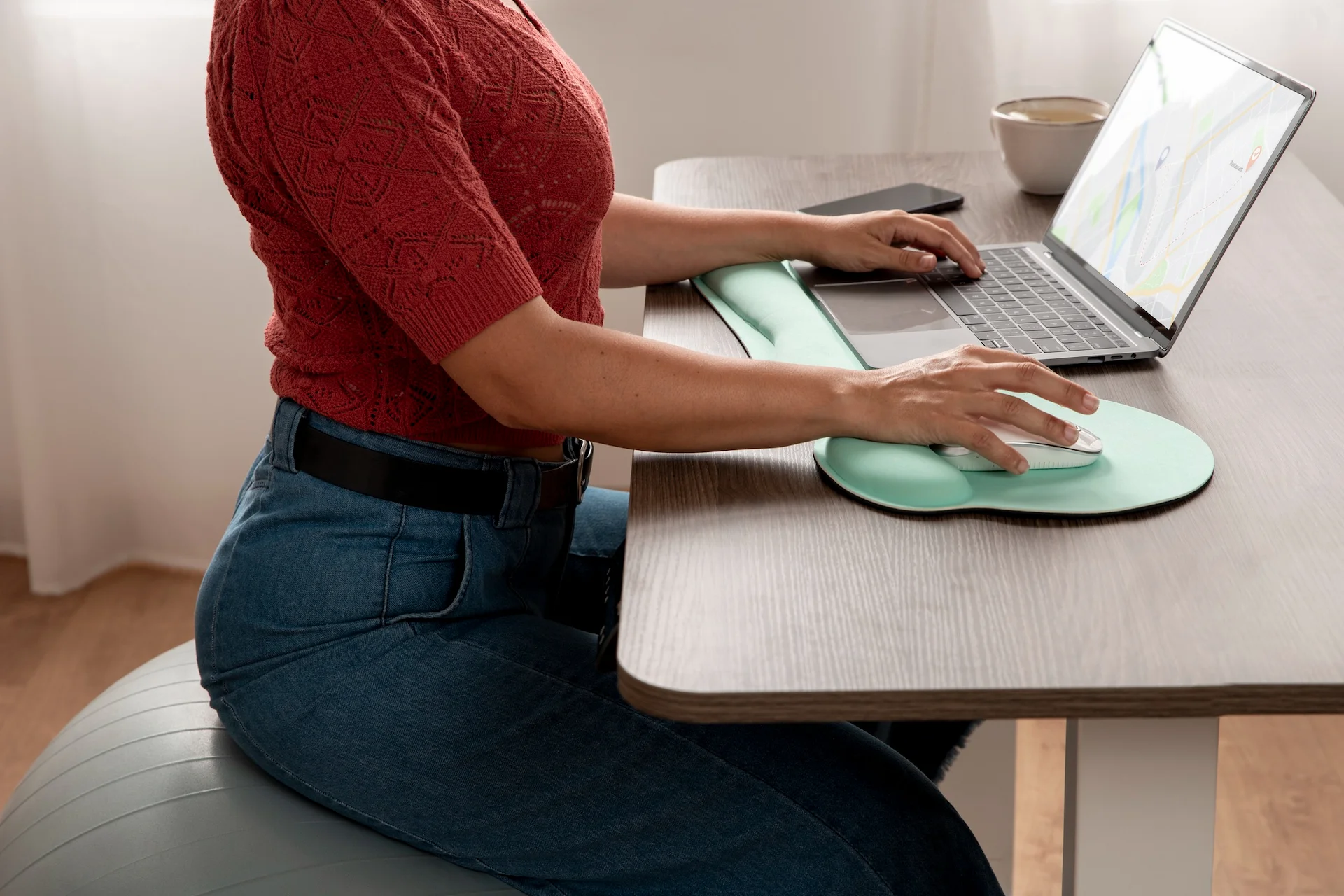
- Desk-based work- prolonged sitting and forward-reach bias
- Manual labor- repeated directional loading and bracing
- Standing or service roles- habitual weight-shifting and support patterns
- Driving or equipment operation - fixed rotation and limited movement variation
In every case, the body organizes itself to remain stable under repeated demands. That organization feels normal, until it doesn’t.
How Small Biases Become Defaults
I believe the body isn’t choosing posture, it’s choosing balance under gravity. Small asymmetries in how someone sits, reaches, or stabilizes themselves become unconsciously preferred because they feel stable. When repeated over time, especially during development, these preferences harden into defaults, reinforced automatically by muscles, connective tissue, and the nervous system reorganizing around whatever has become the norm. The nervous system doesn’t flag it as a problem. By the time pain appears, the internal organization has already been reinforced for years. And it’s not something you’re trained to notice when you’re 8 years old like myself and you’re overarching your right arm when you’re writing test after test, exam after exam.
Why IMM Often Goes Unnoticed
- background effort
- recurring tension
- a sense of holding yourself together
- the way work has always felt
- a body that needs constant managing
Because the pattern is familiar and functional, it is rarely questioned. It simply becomes the way things are.
How to Tell If This Applies
IMM isn’t something you are told you have. It is something you recognize.
“My body twists more one way.” “I always feel like I’m standing on one leg.” “My upper body doesn’t rotate evenly.”
“Something feels stuck or glued.” “I only breathe into one side.” “My body is always bracing.” “Nothing lines up naturally.”
If any of those sound familiar, your posture may not be the problem. It may be the result of one.
You won’t be told you have IMM- I wasn’t, but what I described to everyone around me certainly fit the description. If what I am saying clicks into place rather than requiring you to be convinced, that recognition is the signal. How deeply you resonate with this story is roughly proportional to how thoroughly IMM has organized your body. It’s weird how I can make that connection but it’s a connection I am confident in after going through what I have gone through. Someone with a mild pattern will find parts of this familiar. Someone who has lived inside this for a decade will feel like they wrote it. Trust that. It matters more than any assessment.
3
What was actually
holding the pattern
together
Every approach I had tried assumed the problem was muscular. Stretch the muscles, strengthen the muscles, retrain the muscles. The assumption was reasonable. It was also wrong- and understanding exactly why it was wrong is the one “click”, the one “layer of understanding” that was missing the entire time.
The root cause
It was never your muscles. It was what was wrapped around them.
Every approach, strategy, or tool only brought temporary relief. Muscles were being stretched, strengthened, and retrained- but the myofascial system surrounding them had already hardened into the shape of the problem. Until that structure was addressed, nothing was ever going to hold.
What you’re going to see later on is what I did for myself over and over again- I didn’t understand the science behind what I was doing at the time but the relief it was bringing me and the subtle realization that I didn’t feel “off” as much was enough signal for me to continue. Everything I’m explaining here now is based on the fundamental scientific connections between my past symptoms, the improvements I felt, and the exercises I was doing. Because we’re dealing with the human body, we’re dealing with fundamentals. I wasn’t adding anything to my body- I was actually removing.
What Myofascia Actually Is
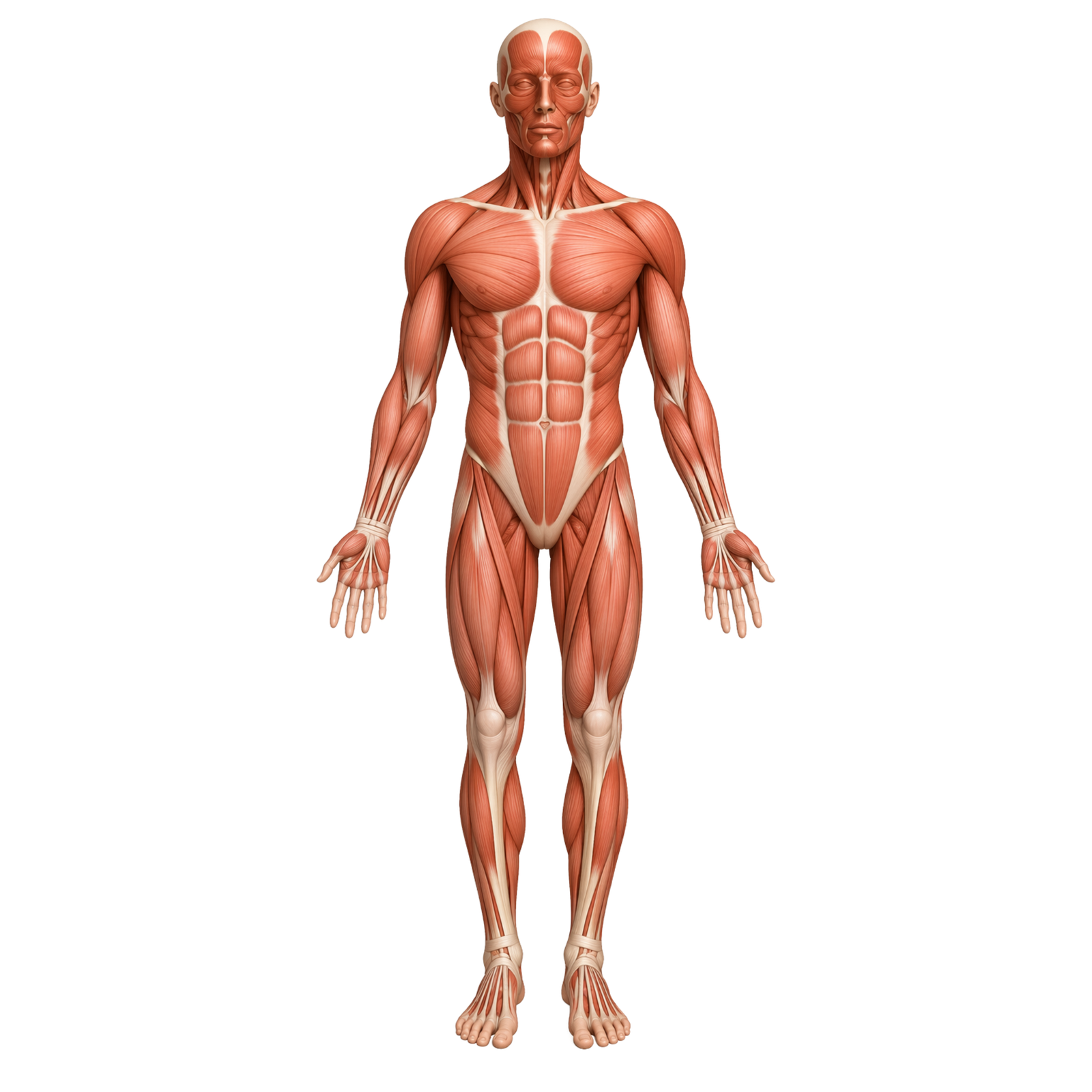
That thing that I mentioned before that’s wrapped around my muscles? Around yours? It’s called Myofascia. Myofascia is a continuous, unbroken web of collagen-based connective tissue that wraps every muscle, organ, and joint in the body. It is the system that holds everything else together. It does not stop at the edge of one muscle and start again at the next- a restriction anywhere in that web can create tension everywhere downstream.
The Research Behind It
Dr. Robert Schleip, director of the Fascia Research Project at the Technical University of Munich, has demonstrated that fascial tissue actively adapts its stiffness, organizes along lines of repeated mechanical stress, and can hold the body in asymmetrical patterns independently of muscle activity. A 2017 review published in the Journal of Applied Physiology confirmed that fascia forms a body-wide network capable of transmitting force between distant structures, meaning a restriction in one region produces mechanical consequences far from its source. IMM is my name for what happens when that process has run long enough to become the body’s default organization.
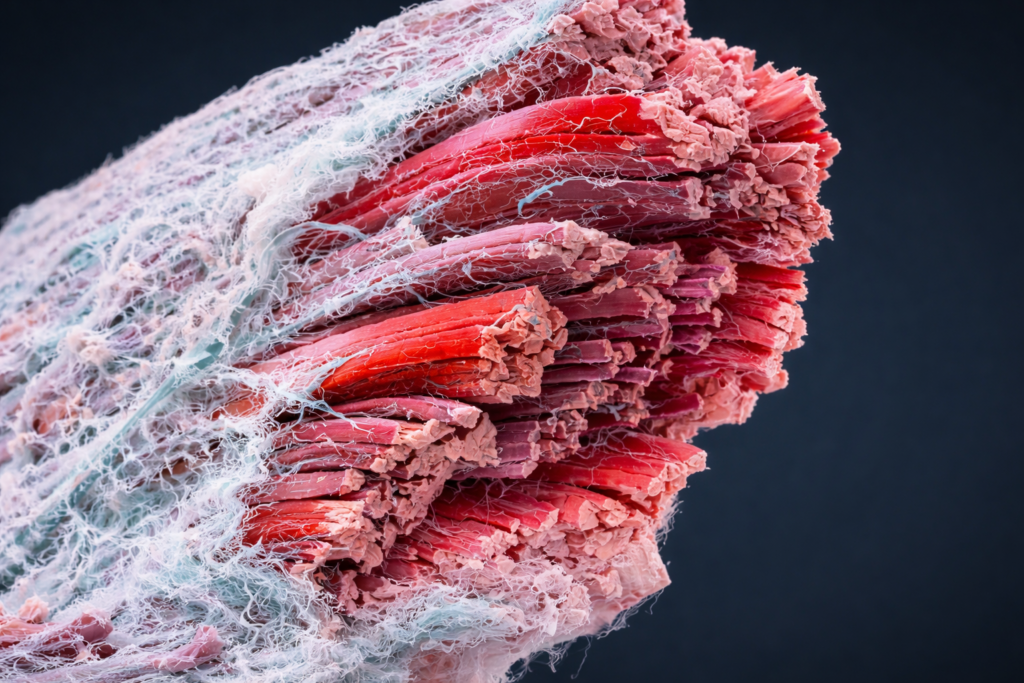
How Muscle Imbalances Get Locked In
How the Lock Forms
It rarely starts with an injury. Sometimes it starts earlier than that- often in childhood, before you’re aware enough to notice it happening, like it did with myself. You favor your right hand, so you reach, throw, and carry with your right side thousands of times a year. Your left hip sits slightly higher when you stand because you’ve always defaulted weight onto your right leg. You sleep on the same side every night. You twist toward the TV in the same direction for years. None of this feels significant. None of it is.
Until it is.
Each repetition is a vote. The body is always listening, always adapting. After thousands of those votes, the myofascial system stops treating the pattern as a preference and starts treating it as the baseline- collagen fibers orienting along lines of repeated stress, layers that were designed to glide freely beginning to adhere, tissue thickening in some areas and shortening in others. The body has restructured itself around the asymmetry. What began as a habit has now become architecture.
This is not malfunction. It is the body doing exactly what it’s designed to do: stabilize whatever you keep asking it to stabilize– what we’ve all been doing is doing exactly that but, subconsciously.
Why Stretching Doesn't Reach It

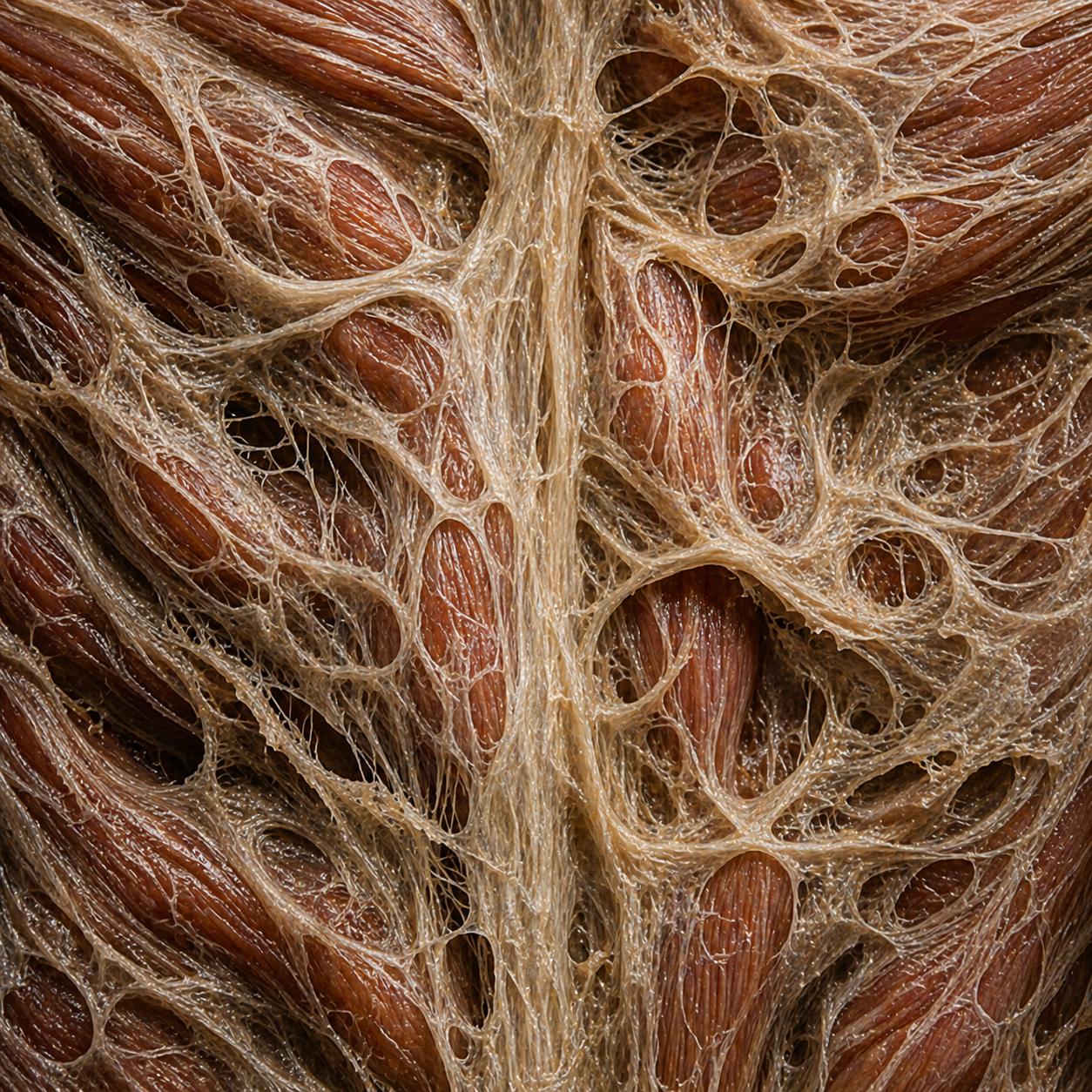
Once those adhesions form, the muscles inside them can no longer reposition freely. They are not weak or tight in the way stretching addresses. They are structurally constrained, held by myofascia that has hardened into the shape of the imbalance. The fascia has restructured itself around that position and is actively holding it there. Stretching addresses the interior. The exterior- the fascial wrapping- remains unchanged. The muscle returns to the constrained position because the structure preserving it, guarantees it.
How Long It's Been There MatterS
The longer IMM has been present, the more thoroughly the myofascial system has organized itself around the pattern. Collagen cross-links accumulate. Layers adhere. Circulation decreases, fascia dehydrates, pliability reduces. The pattern becomes more fixed and more invisible- present so long it no longer registers as abnormal. Personally, the roots of my IMM “foundation” were laid when I was around 7–8 years old, and 20 years of weightlifting, sports, and time did the rest.
Why No Two Timelines Are The Same
Every human body carries a different history with different compensations accumulated over different periods of time. Recalibration reflects that history. Some changes appear early. Others emerge later. None of this indicates success or failure. It reflects the specific path your body is working through. Progress does not feel like steady, visible improvement. Periods of noticeable change are followed by quieter phases where work happens beneath the surface.
If you join the Program today and see no results in 7 days time, or 7 weeks’ time, or 7 months’ time, it’s because the human body doesn’t understand time, it understands state. 10+ years of compensation and IMM has taken its toll, and RMU will have to run its course. This is a state-based process and the time between states depends entirely on your body’s history. Where you have been will determine how long it will take for you to get to where you should have been. This is a fundamental fact that you must understand in order to be patient with this process and the Program. But rest assured- I always reminded myself “if there’s pain being felt, there’s progress to make”. Essentially, as long as RMU hurt, I know the problem existed. No hurt, no problem.
4
Why common fixes
don't change
the structure
“You’re tight. You need to stretch.”– Stretching changed sensation, not the structure holding the muscle in place. The tension returned because what was preserving it hadn’t changed.
“You’re weak. You need to strengthen.”– Strengthening added force on top of an already constrained system. A stronger version of a compromised pattern is still a compromised pattern.
“Your core is weak.”– A stronger core stabilized whatever position already existed, making the compensated posture more durable- not less necessary.
In every case, I was building capacity on top of a flawed foundation. The internal structure stayed the same, so the pattern returned. What I did not know like most people at the time was that those pieces of advice make sense- when you don’t have IMM, when your muscle imbalances aren’t locked into place by your myofascia. Take a look below at every single technique, tool, and strategy that I tried over the past decade in my journey to fix my back pain.
You've already tried the obvious answers.
These approaches exist for good reasons. They help with a lot of things. IMM isn't one of them- and here's precisely why each one stops short.
Neck Hammocks & Extension Devices
"It felt good in the moment. The tension came back within hours."
Cervical traction creates temporary decompression along the spine, and that relief is real. But the tension returning to the neck is a downstream consequence of how the body is organized from the thoracic spine and core upward. Decompressing the neck doesn't touch the rotational and myofascial pattern producing the compression. The moment you stand up, gravity reasserts the same internal organization.
Posture Braces
"My posture was perfect. While I was wearing it."
A brace holds the body in the position it can't hold on its own, which tells you exactly what it doesn't address. The internal structure organizing your body hasn't changed. Remove it and the body immediately returns to the pattern it's been reinforced in for years. Worse, braces can reduce the proprioceptive feedback your body needs to adapt on its own.
Ergonomic Chairs
"A better environment for the same internal pattern."
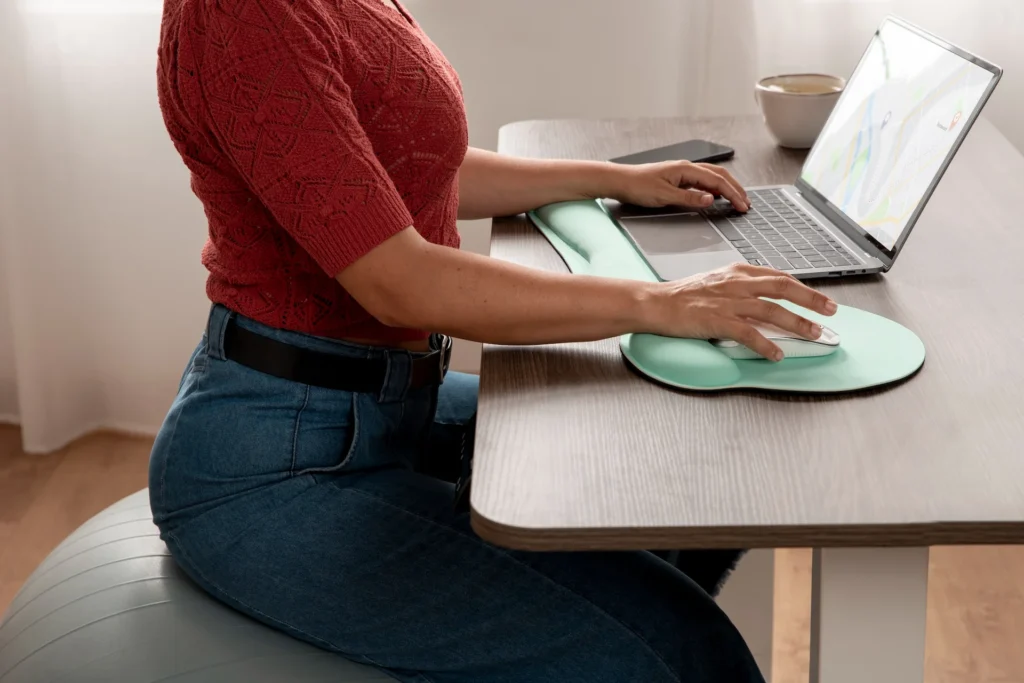
Ergonomic chairs are designed around a body in neutral alignment- which is exactly what IMM prevents. When the internal myofascial pattern is already rotated and compressed, the chair accommodates the compensation rather than resolving it. You feel less pain at your desk. You still carry the same structure everywhere else.
Strengthening for Back Pain
"A stronger version of a compromised pattern is still compromised."
Pain in a region doesn't mean that region lacks strength. In IMM's case, it means that region is being overloaded by a structural imbalance elsewhere. Strengthening muscles that are already compensating for a myofascial restriction doesn't reduce the restriction- it makes those muscles better at compensating. The pattern becomes more durable, not less present.
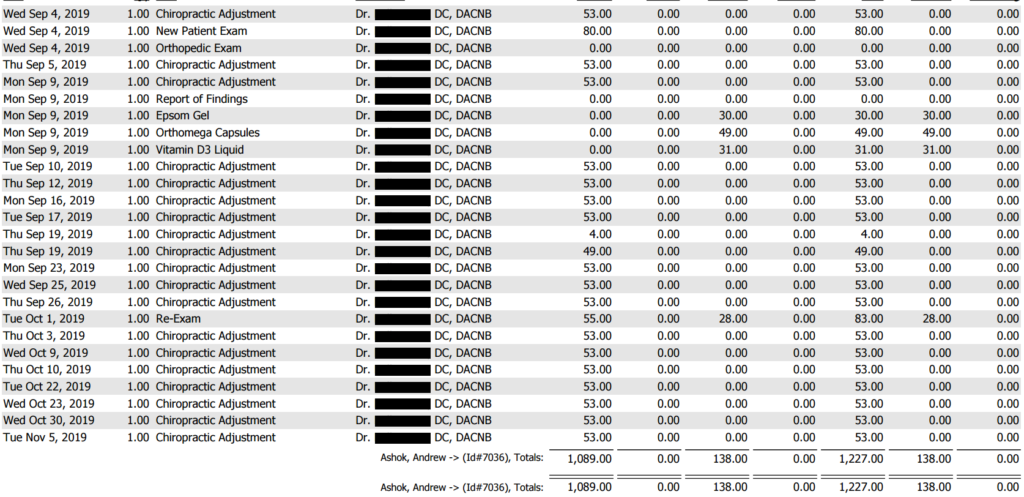
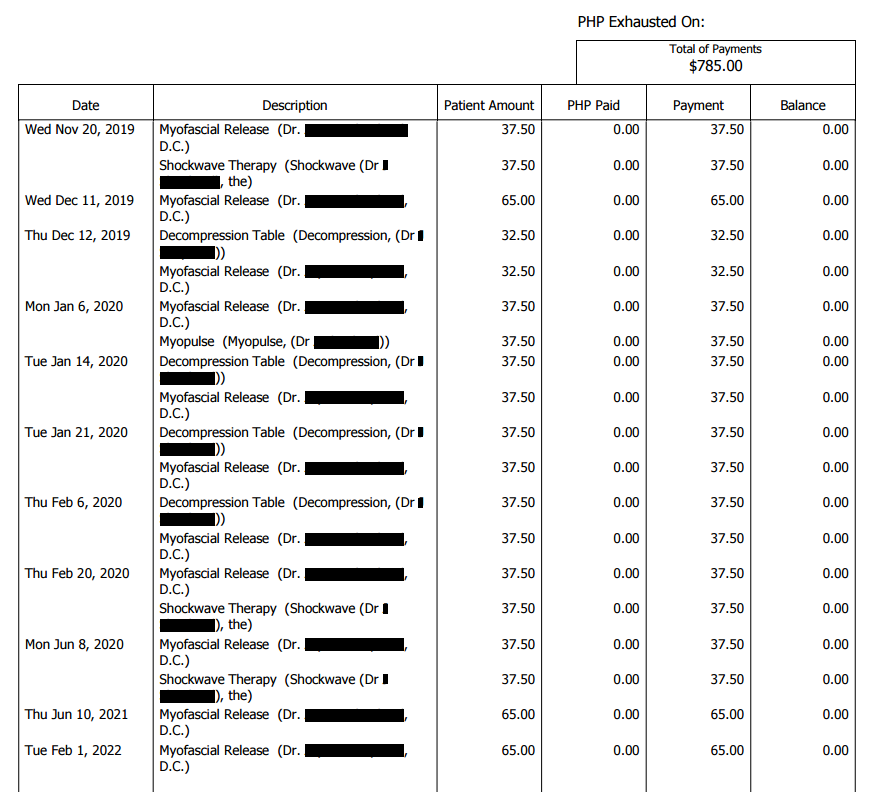
$7,112
The average out-of-pocket spend on back & neck pain treatment in year one alone- for people who keep going back.
Source: ScienceDirect, Healthcare Resource Utilization for Chronic Low Back Pain (2023)- mean first-year back pain-related costs across 16,917 patients. Cumulative mean over 5 years: $31,459.
How Much These Methods Really Cost You
The methods you’ve already tried- & what they actually cost over time.
Method
Typical Cost
Avg. Frequency
Yearly
Spend
What Actually Changes
Physiotherapy
$75/session
Bi-weekly
~$1,950/yr
Temporary relief, no internal change
Chiropractic
$75/session
Weekly
~$3,900/yr
Alignment never holds
Massage Therapy
$75/session
Every 2–4 weeks
~$975–$1,950/yr
Relaxation only
Osteopath Treatments
$120/session
Monthly
~$1,440/yr
Mobility improves, twist returns
Acupuncture
$80–$100/session
Weekly / Bi-weekly
~$2,080–$5,200/yr
Pain relief only
Posture Braces
~$50
Occasional purchase
$50/yr
No structural correction
Ergonomic Chairs
$300–$600
One-time
$300–$600
Comfort only
At-Home Decompression Devices
~$50
One-time
$50
No effect on rotation
Posture Rocket Program
$899.97 (3 payments)
Daily use at home
$899.97 total
Targets the internal pattern every other method misses
* Yearly spend based on customer-reported averages.


The root cause
These therapies aren't wrong. They're just designed around a premise that doesn't apply here.
Every conventional therapy operates on a reasonable assumption: pain means damage. Avoid it. Work around it. Reduce it. That assumption is correct for almost every situation it was designed for. If you have spent years in pain-free therapies without lasting structural change, this is likely why. The process that was needed produces a sensation that every well-designed therapy is trained to avoid.
5
The process that
reaches what nothing
else could
If the myofascial system was holding the pattern in place, releasing that hold required something that could actually reach it. Every approach I had tried worked on muscles- but what was around the muscles had never been addressed. That gap is where RMU represents.
Rotational Myofascial Unwinding (RMU)
How It Works
RMU applies controlled rotation under sustained bodyweight pressure to restricted regions. When rotation is introduced while pressure is maintained, internal shear occurs between bound layers of connective tissue- allowing those layers to begin separating. RMU doesn’t force correction. It removes the constraint that was preventing reorganization from happening on its own. The process that emerged from that understanding became what I call Rotational Myofascial Unwinding- RMU. Having a hard time visualizing this process? Don’t worry, I’m going to show you exactly what it looks like.
What I Can & Can't Claim
RMU is a term I coined. It does not appear in medical literature under this name. What it describes- the application of rotational shear to restricted fascial tissue under sustained pressure- draws on established principles of myofascial release and the biomechanics of connective tissue. Schleip’s research established that fascial tissue responds to mechanical loading and can alter its structural properties over time. The rotation element is my addition: the observation that lateral rotational force combined with sustained pressure appeared to reach layers that linear compression alone did not. I cannot prove this mechanism in a laboratory. In my experience, IMM is a problem that has only one true solution which can work from home without the use of anyone else. If IMM is the root cause and myofascia is what needs to be targeted, RMU is the only way that worked for me.
What the Discomfort Means
This process is not comfortable. What I encountered was not damage- it was information. Specific discomfort pointing to exactly where structural constraint remained. Learning to distinguish mechanical discomfort from injury was one of the most important parts of moving through the process rather than stopping at the first sign of resistance (pain).
The root cause RMU hurts. Here's exactly why. Your fascia fires back. That is the process working.
Your fascia fires back.
That is the process working.
When you apply your full bodyweight in rotation, you are loading tissue that has never been moved in that direction. Your body reads this as a mechanical event and responds chemically. Pain receptors embedded throughout the fascial network activate. A deep, burning ache sets in- similar to heartburn, but in your core. That sensation is not damage. It is your tissue responding to being addressed this specific way for the first time. The compounds responsible for that burn- bradykinin, substance P, serotonin- are present in elevated concentrations in restricted fascial tissue. RMU disturbs them.
As documented in the National Institutes of Health’s research on myofascial pain mechanisms, these are the same chemical compounds that produce burning, deep aching sensations throughout the body. Their presence in restricted fascia is what makes conventional therapy uncomfortable enough to stop- and what makes RMU uncomfortable enough to work.
Every conventional therapy is designed to avoid this sensation. That is exactly why they never reach it. However, what I’ve personally learned is that pain is progress if it has a positive purpose.
What Is Actually Changing During RMU
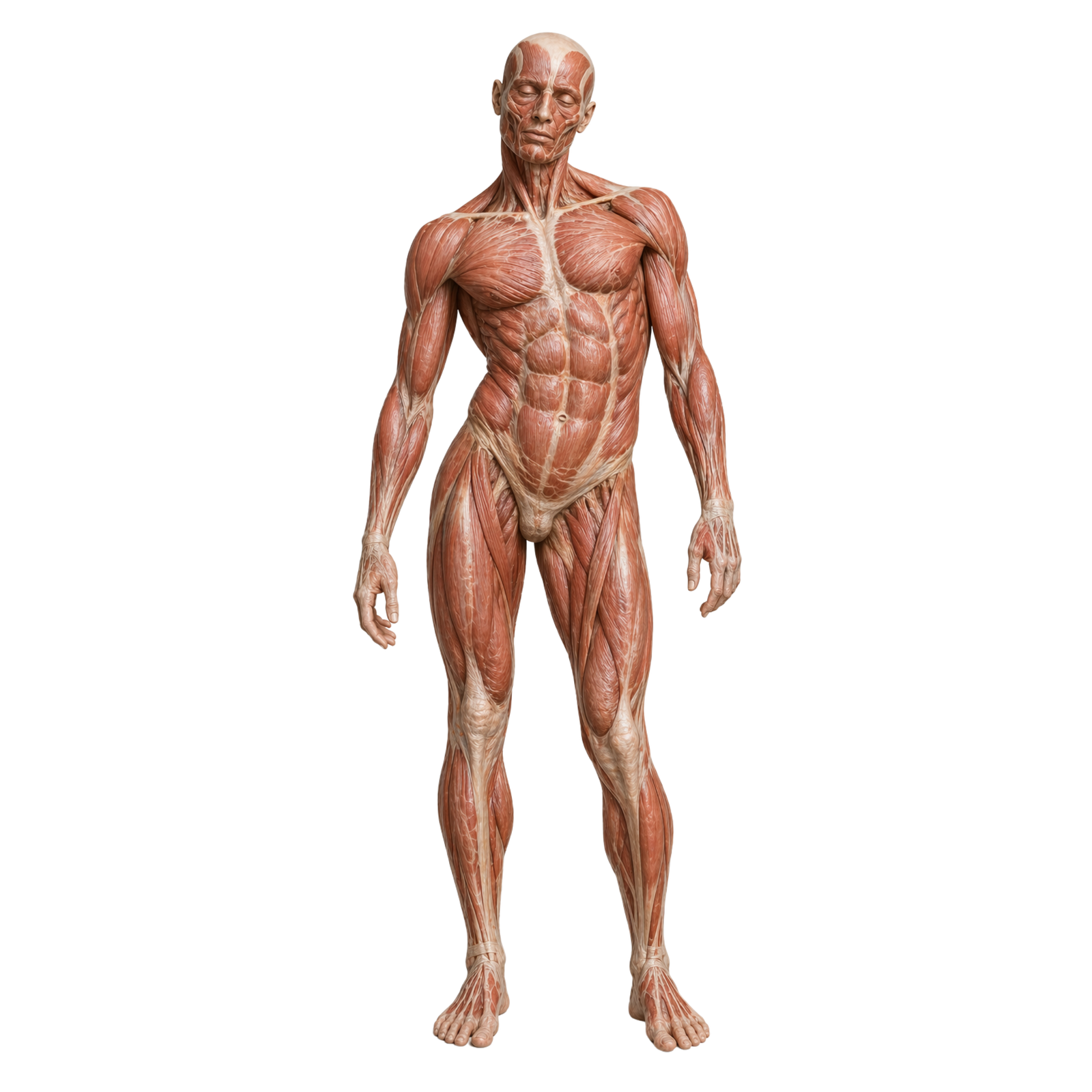
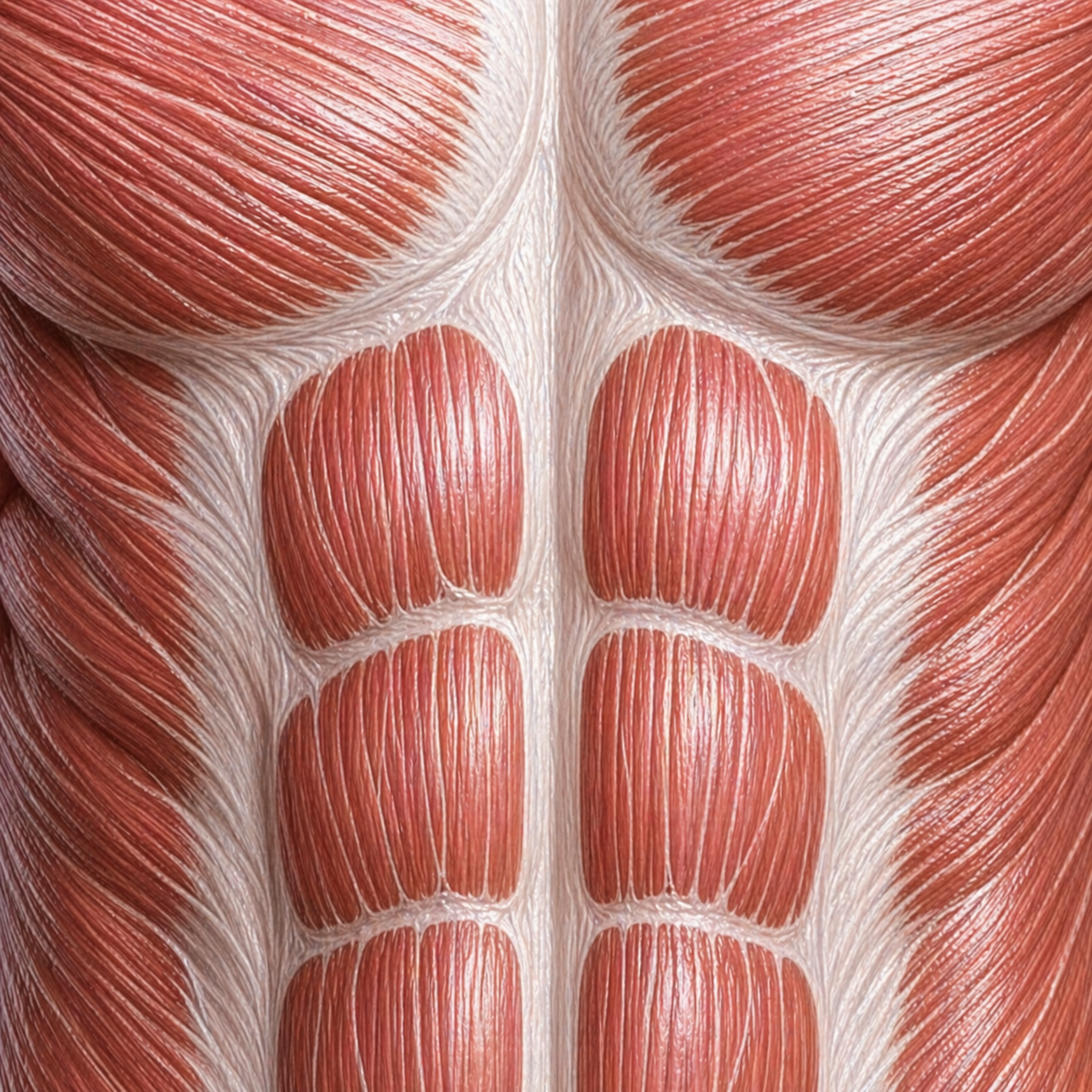
As those myofascial layers released inside my body, muscles that were no longer held in fixed positions by the surrounding structure “floated” back into alignment. Alignment emerged once internal resistance diminished. In my experience, they relocated without being directed- not because something pushed them into place, but because what had been holding them out of place was no longer doing so. That is what happens when my IMM’s mechanical myofascial constraints were resolved.
Myofascial Layers- Before & After RMU
What This Makes Possible
Once constraint is reduced, the body no longer has to compensate for it. Posture doesn’t need to be corrected- it begins to reorganize on its own. But RMU requires the right tools to apply it correctly. That’s what the next section covers.
The Two Tools
Two tools. Two densities. One sequence. Each one has a specific job at a specific stage, and neither works the same way outside of that sequence.
Phase 1 & 3
Regulation Rocket
Density
Softer- compresses under bodyweight
Purpose
Lowers bracing and prepares system for Integration, stabilizes after Integration
Used in
Phase 1 and Phase 3
Phase 2
Integration Rocket
Density
Firmer- supports body through rotation
Purpose
Provides firm environment for RMU to be completed properly
Used in
Phase 2
6
The 3 Phases of the
Posture Rocket
Protocol
RMU is guided through controlled pressure, positioning, and breath, not force. The Posture Rockets create the specific environment required for that to happen. What does this mean? Your body is doing the work; the Rockets are just a stable surface for it to be completed. Each phase uses a different pressure response to move the body through a structured progression: Warm. Release. Cement.
The mechanism produces its own signal- in my experience, the body’s feedback at each stage was precise enough to confirm exactly where the process was and what was occurring. You do not force anything- you breathe deep and let go, letting your body sink in, basically melt into them. Once that’s happened, the real work begins.
1
Phase 1- Regulation
Warm the System
Tool: Regulation Rocket- softer response
The Regulation Rocket compresses enough to reduce surface tension without triggering defensive guarding. The goal is not release; it is lowering background bracing so the body will accept Phase 2. This rotation is a new sensation you’ve never felt so this phase helps the nervous system shift out of protection mode. In my experience, the difference between arriving at Phase 2 with this foundation and arriving without it was immediately apparent in how the body responded.
2
Phase 2- Integration
Reorganize Through Controlled Intensity
Tool: Integration Rocket- firmer response
This is where RMU occurs. The Integration Rocket holds its shape completely, creating a stable axis beneath the body. That sustained load drives pressure into the deeper fascial layers.
Once settled, you introduce rotation, slowly, without forcing. This is the force that creates shearing between bound myofascial layers. Bodyweight holds the layers in contact. Rotation introduces the directional shear that allows them to separate. These two forces working together is what RMU is.
The sensation is specific and directional, pointing precisely to where structural constraint remains. A non-specific ache- something I was able to “trace”- is your body’s way of telling you where “to go” next. A specific, located sensation that responds to the direction of rotation is myofascial restriction being engaged.
3
Phase 3- Stabilization
Cement the Change
Tool: Regulation Rocket- same tool, different outcome
Phase 3 returns to the Regulation Rocket, but what it accomplishes here is entirely different from Phase 1. With myofascial layers now released from Phase 2, the softer tool flattens and settles that lengthening into place. Phase 3 cements the new state so the tissue doesn’t reseal.
Without this phase, released myofascia can begin to rebind. With it, the structural change holds. Quieter. More settling than softening. I found increased progress when I included this Phase. The body is not being prepared, it is being stabilized around what has already shifted.
Warm · Release · Cement
Each phase has a purpose. Each tool has a role.
The sequence is what makes the protocol work.
How the protocol is used
One Natural Alignment
This is not a process you do once. Your body has one natural alignment, and how long you have lived with IMM is directly related to how long returning to it may take. For me, it took thousands of repetitions across months of self-directed work. That is not a warning. It is an honest description of what structural recalibration looks like when IMM has been present for years.
Self-Guided & Self-Paced
The Videos Are a Library, Not a Program
The Mind-Muscle Connection Develops
As you repeat the protocol over time, something else develops alongside the structural change: your body begins to communicate more precisely. Tension patterns become readable. Sensations become specific rather than vague. The mind-muscle connection most people treat as an athletic concept becomes a real navigational system- one that tells you where resistance remains, when a layer is releasing, and when a session has done what it needed to do. Mine developed significantly over the course of the process. It continues to refine.
7
Once my myofascia
released,
everything
else followed
What you’re about to read reflects what I personally noticed after the internal pattern that had been shaping my posture re-aligned. This part is hard to explain, but I went into this not knowing just how many things were going to be and feel different. Because it was my first time- and as far as I’m concerned, the first time ever anywhere- there was no path for me to follow, no expectations to look forward to. I went into it blind and came out enlightened. The following is what has followed since IMM stopped being my issue.
Nothing here is promised or guaranteed. This is not a list of outcomes to pursue- it is a description of what became possible once my body no longer had to work against itself to move, balance, and function.
Structural Changes
As the internal tightness that had been twisting my body released, everything else stopped fighting to stay upright.
- Standing no longer required constant internal management
- Balance felt even instead of subtly pulled to one side
- Support felt shared across the whole system rather than dominated by one area
- Joints rested naturally without active positioning or monitoring
- Internal tension softened instead of pulling against itself
- Movement began to follow simpler, cleaner, automatic paths
- Stability felt passive rather than something that had to be maintained
Posture- Before & After
Symptoms- Before & After
Before- Active Symptoms
- Chronic neck pressure
- Right shoulder tension
- Mid-back stiffness
- Shallow breathing
- Visible asymmetry
- Constant internal bracing
After- Resolved
- Neck pressure, gone
- Shoulders level and resting
- Mid-back mobile
- Breathing full and bilateral
- Symmetry restored
- Bracing no longer present
Movement & Performance
Once my body stopped protecting against internal strain, movement stopped working around problems it had been quietly avoiding.
- Exercise required less conscious correction to feel right
- Movements stopped pinching or triggering familiar strain patterns
- Muscles began engaging without compensatory involvement of surrounding structures
- Form improved without being forced or monitored
- Force transferred more smoothly instead of leaking through inefficient pathways
- Joints handled load more evenly across their surfaces
- Progress felt steadier because wasted effort was decreasing
Nervous System Changes
When sustained bracing stopped being necessary, my body began to settle in ways that extended well beyond posture and movement.
- Baseline tension lowered and stopped rebuilding as quickly
- Breathing felt deeper and more natural, expanding into areas that had previously felt restricted
- Stress responses softened
- Sleep became easier and felt more restorative
- Fatigue reduced instead of continuing to accumulate
- Body awareness improved without requiring active vigilance
Postural & Visible Changes
As internal strain reduced, posture shifted- not through effort, but as a direct mechanical consequence of what was no longer pulling the structure out of position.
- Posture held without reminders or conscious correction
- Torso stayed upright instead of subtly collapsing throughout the day
- Shoulders rested more level without being set there
- Waist symmetry improved as the underlying rotation reduced
- Alignment looked natural rather than effortful
Daily Movement & Behavioral Shifts
Normal movement felt lighter. Perhaps most noticeably: I stopped negotiating with my body before doing things.
- Standing felt supported rather than strained
- Bending and lifting felt balanced rather than something to brace for
- Stiffness reduced- particularly in transitions between positions
- I stopped negotiating with my body before doing things
- Consistency in movement improved without requiring forced discipline
- Comfort became the default rather than the exception
Posture didn’t change because I corrected it. It changed because what had been pulling it out of balance stopped doing so. The change wasn’t imposed. It wasn’t trained. It was what remained once the constraint was gone.
Why No Two Timelines Are The Same
Every human body carries a different history with different compensations accumulated over different periods of time. Recalibration reflects that history. Some changes appear early. Others emerge later. None of this indicates success or failure. It reflects the specific path your body is working through. Progress does not feel like steady, visible improvement. Periods of noticeable change are followed by quieter phases where work happens beneath the surface.
If you join the Program today and see no results in 7 days time, or 7 weeks’ time, or 7 months’ time, it’s because the human body doesn’t understand time, it understands state. 10+ years of compensation and IMM has taken its toll, and RMU will have to run its course. This is a state-based process and the time between states depends entirely on your body’s history. Where you have been will determine how long it will take for you to get to where you should have been. This is a fundamental fact that you must understand in order to be patient with this process and the Program. But rest assured- I always reminded myself “if there’s pain being felt, there’s progress to make”. Essentially, as long as RMU hurt, I know the problem existed. No hurt, no problem.
8
The Posture Rocket
Program
If you’ve made it here, congratulations. If there was a faster way to provide an in-depth explanation of my entire journey for you, I would have figured it out. After 20+ revisions of this business model and its components, you’ve arrived at what took more than a year to develop.
The Posture Rocket Program is a one-time access program documenting my complete structural recalibration process based on lived experience. Everything required to move through the process is included. Nothing is withheld behind an upsell or a higher tier.
This is not treatment, therapy, diagnosis, or medical care. It does not replace professional clinical assessment or care. If you are currently under active treatment for an acute injury or medical condition, please consult your clinician before beginning. Individual response varies. Participants remain fully responsible for their own decisions, pacing, and wellbeing throughout.
What's Included
1
One Natural Alignment
The Two Tools
Purpose & Design
The Science of Size
2
The Protocol & Video Guides
What's Documented
State-Driven, Not Time-Based
The Tools Stay
3
Recalibration Community- Lifetime Access
What It's For
What It's Not
It is not a coaching service. It is not somewhere I’m waiting to walk you through each session. The work is yours to do. That’s the point. It is not coaching, diagnosis, or outcome prediction. It is a resource. Use it when you need it.
COMMUNITY EXCLUSIVE
Recalibration Techniques - Member Exclusive
The pattern doesn’t just live in your fascia. After years of unconscious bracing, your nervous system has organized itself around the imbalance – and that organization shows up in more places than your posture.
During my own process I noticed it in my breathing, my sleep, my digestion, my energy levels, and in aches that surfaced in places I never expected. Nobody explained any of it to me. I figured it out by living through it.
Inside the community I share the videos, tips, and techniques that came out of that experience – covering every area the recalibration process touched that I wasn’t prepared for:
How to listen to your body – mind to muscle connection
Using massage and chiro to speed things up – accelerating progress with professionals
Diet – repairing the good damage
Dealing with gut issues – heartburn, constipation, trunk pressure
Muscle Aches – external, not internal pain
Insomnia – nervous system blocking rest
Breathing – quiet breath, head release
Sleeping position – hips, support, repositioning
Standing – catching unconscious bracing live
These are not publicly available. They exist inside the community exclusively, for members who are actively working through the protocol.
~40%
Estimated reduction in time to completion when applied from the beginning
4
Three Onboarding Sessions, Scheduled with Me
Your First Session
How to Use All Three
Beyond Three
Who This Is For
- People who recognize long-standing posture or movement patterns they have not been able to resolve through conventional approaches
- Those who want a clear, structured, finite process rather than motivation, reassurance, or ongoing maintenance
- Those who have already tried chiropractic, physiotherapy, massage, stretching, and strengthening- and are still stuck
Who This Is Not For
- Anyone seeking a quick fix or a passive solution
- Anyone looking for reassurance or certainty before committing to a process
- Anyone unwilling to proceed without guaranteed outcomes or prescribed timelines
The investment is $899.97 USD.
Financing is available. Below are questions real members asked before they committed, and the answers that helped them decide.
Where do you ship?
What happens right after I purchase?
How do I access the videos?
How big are the Posture Rockets?
Do I need any prior experience or fitness level?
Are there any conditions that would prevent me from using this program?
Is this painful?
Are there side effects I should know about?
Is there any risk of injury?
What if I find the pain too much to continue?
How often do I do this?
How do I know what I'm doing is right?
How long does this take?
How will I know when the process is complete?
What if what worked for you doesn't work for my body?
Can I still use the Rockets once the process is complete?
Why do I need the community if the videos cover the protocol?
Why Facebook? What if I don't use it?
Can I pay in full?
What happens if a payment fails?
$899.97 USD
3 payments · Card secured at checkout
$299.99 USD today · $299.99 USD at 30 days · $299.99 USD at 60 days
Payments are charged automatically to the card provided at checkout.
This is a decision, not a trial.
This will feel like a significant amount of money for something your physiotherapist has never heard of. Your chiropractor probably hasn’t either. Mine hadn’t when I started.
That’s not a reason to hesitate. It’s the whole point.
If the experts could have fixed this, they would have. You’ve already given them the opportunity, multiple practitioners, multiple methods, multiple years. The fact that you’re still here means that path didn’t lead anywhere permanent.
What you’re investing in isn’t a new therapy. It’s the decision to stop funding temporary relief and address the thing underneath it. The information on this page is your evidence. You’ve read it. You understand the mechanism. Trust that comprehension.
The destination is real. The path is structured. The only question is whether you’re ready to take it.
Payment & Refund Policy
There is no guarantee on timeline.
There is a guarantee on destination.
The human body has one natural alignment. This isn’t philosophy, it’s structural mechanics. Thomas Myers’ foundational work on myofascial continuity established that the fascial system organizes the body along load-bearing lines with a mechanically neutral state. Dr. Robert Schleip’s research at the Technical University of Munich confirmed that fascial tissue actively adapts to repeated mechanical stress, organizing itself around whatever pattern the body repeats most.
What years of compensation have built is a deviation from that neutral state. What this process does is systematically reverse it. The destination isn’t an ideal. It’s where the body was already trying to go before compensation locked it somewhere else. How long that takes depends on how long the pattern has been there and how thoroughly it’s organized. I cannot tell you it will take three months. I can tell you there is somewhere to arrive.
Refund Terms
Refund requests are accepted only after the physical tools have been returned. Once received, the condition and usage of the tools will be assessed. If the Posture Rockets are returned in perfect, unused condition, a full refund will be issued. Return shipping is the buyer’s responsibility. A partial refund of the remaining program components may be issued at our discretion following assessment. No refund will be processed prior to return and assessment.
This process asks something real of you. The tools show whether it was engaged with. That assessment is how a fair outcome is reached for both sides.
3 payments · Card secured at checkout · Ships within 5-7 business days · Lifetime community access included
Ships in 5-7 Days
Physical system delivered direct to your door
Financing Available
Flexible payment options at checkout
Lifetime Community
Lifetime Community
Still weighing it up? There’s no rush. Go back to what matters most to you.
Revisit
Check your symptoms against IMM
Remind yourself
What becomes possible when compensation stops
Understand
How the process actually works
Still have questions?
If something on this page wasn’t clear, or you want to know if this process is right for your situation, send a message. Every inquiry is read personally.